

Tag

Slow Living

A close-up of a snail on a table

For most of my life, I believed creativity thrived in busy seasons — the “hustle mode,” the late-night bursts of energy, the long to-do lists that kept me always in motion. But over the past year, I’ve shifted into a slower, more intentional lifestyle, and the impact on my creativity has surprised me in the most meaningful ways.

Slow living began with tiny changes: putting my phone in another room, brewing tea without multitasking, and allowing myself quiet mornings instead of rushing straight into tasks. At first, it felt unproductive — like I was giving up precious time. But slowly, I realized I wasn’t losing time at all. I was reclaiming it.

A close-up of a snail on a table
This is a caption

As the pace eased, ideas began to flow more naturally. I started noticing things I had overlooked: the way sunlight hits my notebook, the sound of leaves outside my window, the softness of fabrics as I work on a project. These small sensory details became creative sparks that I never would’ve noticed before.

I also started journaling again — not the structured kind, but simple, honest reflections. Writing about my thoughts helped me understand what inspires me and what drains me. It made me more intentional with the projects I chose and helped me reconnect with the reasons I started creating in the first place.

Another surprising shift was how slow living improved my emotional well-being. When creativity isn’t rushed, it feels less like a performance and more like an expression. I became kinder to myself, less focused on results, and more attuned to the process. And because of that, I’ve produced some of my most meaningful work this year.

If you’ve been feeling drained, overwhelmed, or stuck creatively, try slowing down. Let your inspiration come from presence, not pressure. Creativity doesn’t always need intensity — sometimes it just needs room to breathe.


Green leafed plant during daytime

There was a time when I believed productivity only counted if it was fast, structured, and perfectly efficient. I rushed through mornings like they were a hurdle to jump, not a moment to savor. But over the last year, I’ve been learning that slow mornings offer a kind of clarity that no planner or routine ever did. When I stopped racing the clock, I started noticing the small pleasures that had always been there—warm light on the kitchen tiles, the soft hum of a kettle, and the calm that comes before the noise of the day.

This shift didn’t happen overnight. It began with small experiments: drinking tea without a podcast in the background, stretching for five minutes before reaching for my phone, or simply sitting by the window and watching the sun rise. These are ordinary moments, yet they transformed the tone of my day more than any rigid productivity hack ever has.

Green leafed plant during daytime
This is a caption

I started valuing mornings not for how much I could get done, but for how connected I felt to myself. There’s a gentle sort of magic in allowing yourself to wake slowly, in giving your mind the chance to wander before jumping into tasks. It’s a reminder that we’re human—meant to feel, breathe, and ease into things.

Of course, not every morning is peaceful. Some days I oversleep or rush out the door with mismatched socks and a messy bun. But even then, I try to find a small anchor—a quick breath, a moment of intention—something that brings me back to center. It doesn’t have to be perfect; it just has to be present.

If you’ve been craving more softness in your daily routine, try giving yourself permission to slow down. It doesn’t require a whole lifestyle change—just a willingness to make space for stillness. Even five minutes can shift everything.

Slow mornings taught me that inspiration doesn’t always arrive loudly. Sometimes it whispers, quietly inviting you to begin again with gentleness.

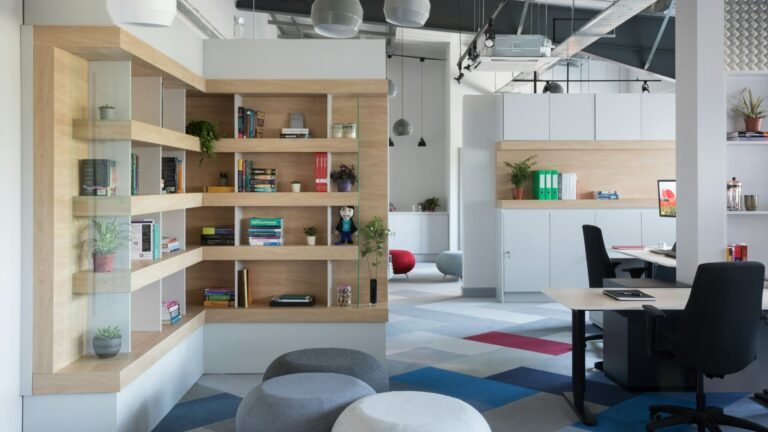
White wooden shelf with books and red ball

There’s a special kind of magic that happens when you step into a workspace that feels calm, grounded, and deeply in tune with your creative rhythms. Over the years, I’ve learned that the environment around me has just as much influence on my work as the tools I use. A cluttered or noisy space tends to make my mind feel scattered, while a quiet, thoughtfully curated corner seems to unlock my best ideas without forcing them. Creating a space that supports slow, intentional creativity has become an essential part of my routine as a maker.

The first change I made was embracing simplicity—true simplicity, not the Instagram version. I cleared out anything that didn’t serve a purpose, whether that purpose was functional or emotional. A workspace doesn’t have to be minimal, but I think it should feel breathable. When the surface of my desk has room for my hands, my tools, and my thoughts, everything flows more gently. I also realized that owning fewer supplies pushes me to use what I have in more inventive ways.

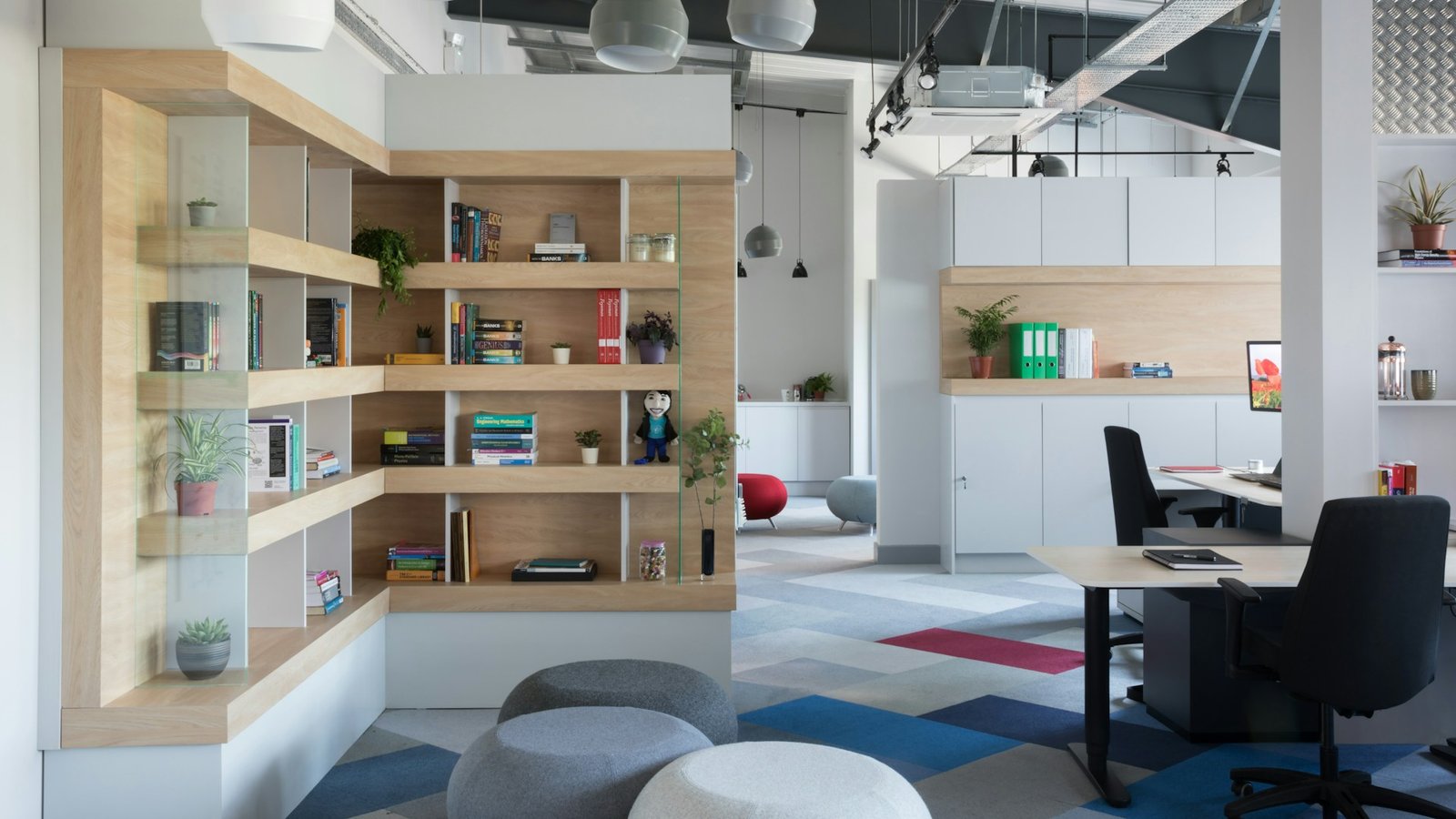
White wooden shelf with books and red ball
This is a caption

Natural elements now play a huge part in shaping the mood of my space. A small plant, a warm wooden tray, even the gentle texture of linen on my chair all make the room feel inviting. Soft, indirect lighting—like a warm lamp instead of a harsh overhead bulb—helps me ease into longer periods of focused work. Little rituals matter, too; lighting a candle or opening the window for a few minutes before starting helps me transition into a more mindful headspace.

Sound is another underrated element of workspace design. For me, certain types of quiet music—or sometimes nothing but the hum of my home—create a sense of stillness that encourages deeper concentration. Other creators thrive on background noise or bustling cafés. The key is paying attention to what genuinely helps you settle into your creative zone. Creating a playlist or a curated set of sounds for different parts of your workflow can make a surprisingly big difference.

Most importantly, I’ve learned to design my workspace around my energy, not trends. Some days I work best sitting at my desk, while on others, I find inspiration by sketching in a cozy corner or editing photos at the dining table. Instead of restricting my creativity to one spot, I’ve created multiple small “creative nests” around my home. It makes my process feel flexible, natural, and less pressured.

A slow, intentional workspace is not about perfection—it’s about creating an environment that feels nurturing, personal, and deeply aligned with the way you make things. When your space invites you to slow down and truly connect with your craft, creativity feels less like something you chase and more like something you return to.